
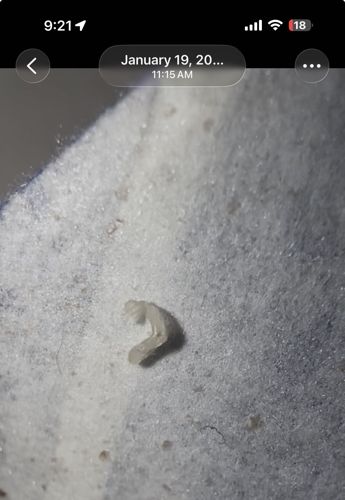
Community identification
Flea Larva
Ctenocephalides felis (most commonly)
- Order & Family
- Order: Siphonaptera, Family: Pulicidae
- Size
- 2mm to 5mm long
Natural Habitat
Typically found in dark, dusty areas such as deep carpet fibers, cracks in floorboards, pet bedding, or underneath furniture where adult flea feces ('flea dirt') accumulates.
Diet & Feeding
Scavengers that feed on organic debris, particularly dried blood excreted by adult fleas (known as flea dirt), dead insects, and vegetable matter.
Behavior Patterns
They are photophobic (avoid light) and actively burrow deep into substrates like carpets or bedding. They undergo pupation in a sticky cocoon before emerging as adults.
Risks & Benefits
Risks: They mature into adult fleas, which bite humans and pets causing itching, allergic reactions, and potentially transmitting diseases and parasites like tapeworms. No benefits to humans or the domestic ecosystem.