
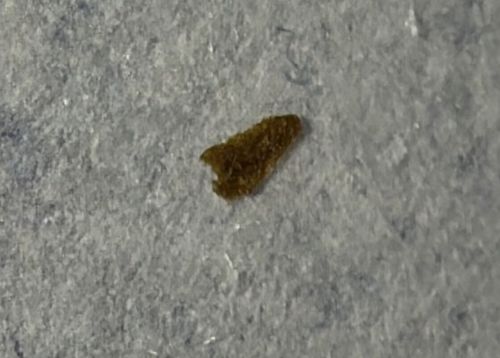
Bed Bug Casing (Exoskeleton/Shell)
Cimex lectularius (shed exuvia of)
- Order & Family
- Order: Hemiptera, Family: Cimicidae
- Size
- Typically 1–4 mm, depending on the nymphal stage (age) of the bug when it molted.
Natural Habitat
Typically found in areas where humans or pets sleep, including mattress seams, bed frames, headboards, behind loose wallpaper, and clutter around sleeping areas.
Diet & Feeding
This specific object is an inanimate shell shed during molting, but the living insect is an obligate parasite feeding exclusively on the blood of warm-blooded mammals, primarily humans.
Behavior Patterns
This casing serves as evidence of a bed bug infestation. Bed bugs go through 5 immature nymphal stages, shedding their skin (molting) at each stage to grow. These skins accumulate in harborage areas, often alongside fecal spots and eggs.
Risks & Benefits
Risks: Indicates a potential active infestation. Living bed bugs cause itchy bites, allergic reactions, secondary skin infections from scratching, prominent sleep deprivation, and significant psychological distress. They are difficult and expensive to eradicate. Benefits: None.