
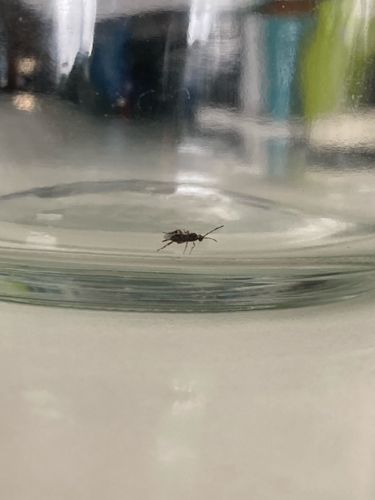
Parasitoid Wasp
Braconidae (subfamily or genus level ID restricted by image clarity)
- Order & Family
- Order: Hymenoptera, Family: Braconidae
- Size
- 1 mm to 15 mm (typically 2-4 mm for common garden species)
Natural Habitat
Widely distributed in gardens, agricultural fields, forests, and occasionally found indoors if hosts are present.
Diet & Feeding
Adults feed on nectar, honeydew, and pollen. Larvae are internal or external parasites of other insects like caterpillars, aphids, and beetles.
Behavior Patterns
Active during the day, females search for host larvae to lay their eggs on or inside. They are highly efficient hunters and have a complex life cycle where the host is consumed as the wasp larva grows.
Risks & Benefits
Benefits: Extremely beneficial for ecosystems and biological pest control as they naturally regulate pest populations. Risks: Generally harmless to humans; most small parasitoid wasps lack the ability to sting effectively or have no interest in humans.