
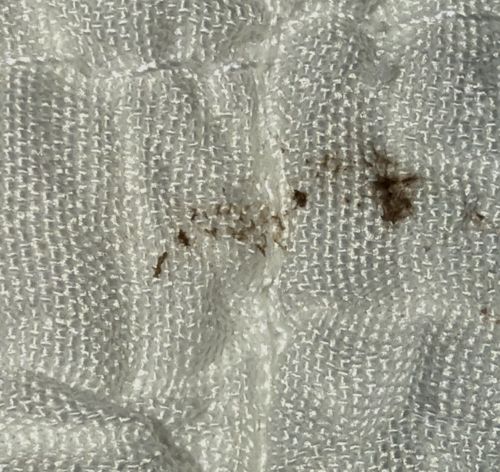
Bed Bug (Fecal Stains and Debris)
Cimex lectularius
- Order & Family
- Order Hemiptera, Family Cimicidae
- Size
- Adults are 4-5 mm (about the size of an apple seed); eggs are 1 mm; nymphs range from 1.5-4.5 mm.
Natural Habitat
Found almost exclusively in human dwellings, hiding in cracks and crevices near sleeping areas, such as mattress seams, box springs, bed frames, behind headboards, and in furniture cushions.
Diet & Feeding
Hematophagous, feeding primarily on human blood, usually at night while the host is sleeping. They can survive several months without feeding.
Behavior Patterns
Nocturnal and elusive. They aggregate in safe harborage sites during the day. The image specifically shows characteristic 'spotting'—rusty or reddish-brown fecal stains left on sheets or mattress seams, often a primary indicator of an infestation.
Risks & Benefits
Risks: Bed bugs cause itchy, red welts that can lead to secondary skin infections from scratching. They cause significant psychological distress, anxiety, and insomnia. They are not known to transmit disease but are significant nuisance pests. Benefits: None to humans or local ecosystems.