
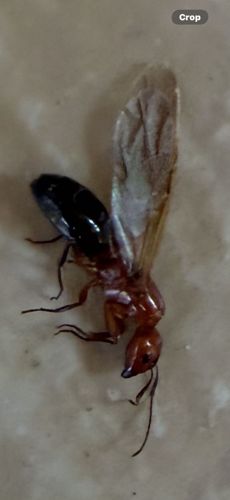
Carpenter Ant Alate (Winged Queen or Male)
Camponotus vicinus (or related Camponotus species)
- Order & Family
- Order: Hymenoptera; Family: Formicidae
- Size
- 10mm to 20mm (Queens are larger than males and workers)
Natural Habitat
Found in both wet and dry environments, typically nesting in wood, soil, or under rocks. Often seen indoors during 'nuptial flights' when they seek new nesting sites.
Diet & Feeding
Opportunistic feeders that consume nectar, honeydew from aphids, other insects, and sugary or protein-rich human food scraps. They do not eat wood; they only excavate it.
Behavior Patterns
This winged individual is an 'alate' (reproductive) meant for mating. They exhibit swarming behavior during warm, humid weather. After mating, queens shed their wings and attempt to establish a new colony by tunneling into wood or soil.
Risks & Benefits
Benefits include aerating soil and accelerating the decomposition of dead timber. Risks include potential structural damage to homes if a colony establishes itself in damp or decaying wood, though they are less destructive than termites.