
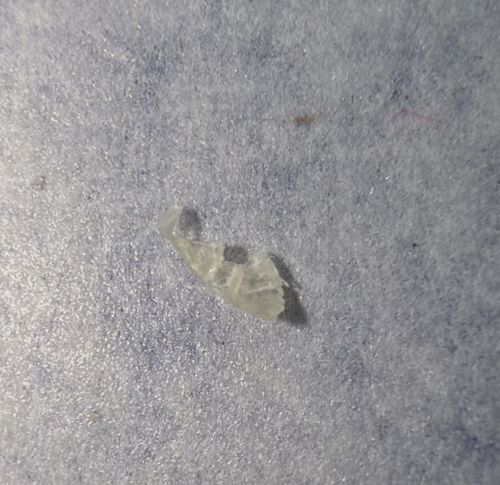
Bed Bug (specifically a shed skin/exuvia)
Cimex lectularius
- Order & Family
- Order: Hemiptera, Family: Cimicidae
- Size
- Nymphs (immature stages) range from 1.5 mm to 4.5 mm; adults are approximately 4-5 mm but can swell to 7 mm after feeding. The skin pictured is likely from a young nymph.
Natural Habitat
Indoor environments close to human hosts; typically found in mattress seams, box springs, bed frames, headboards, behind wallpaper, and in furniture crevices.
Diet & Feeding
Hematophagous (feed exclusively on blood), preferring humans but will feed on other warm-blooded animals like poultry or pets if necessary.
Behavior Patterns
They are nocturnal and cryptic, hiding in tight cracks during the day. They go through five nymphal stages, shedding their skin (molting) at each stage before reaching adulthood. The image shows one of these discarded skins.
Risks & Benefits
Risks: Bed bugs cause itchy, irritating bites and significant psychological distress, anxiety, and insomnia. They are not currently known to transmit disease, but scratching bites can lead to secondary bacterial infections. Benefits: None known in domestic environments.