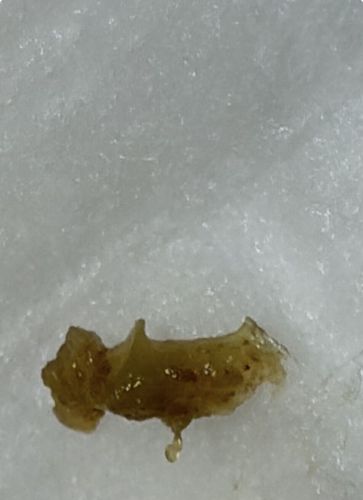
Tapeworm Segment (Proglottid)
Scientific Name: Dipylidium caninum (most common in pets) or Taenia species
Order & Family: Order: Cyclophyllidea; Family: Dipylidiidae or Taeniidae
Size: 3 mm to 12 mm long (resembles a cucumber seed when fresh, a grain of rice when dried)
Natural Habitat
Adults live in the intestines of hosts (dogs, cats, humans). Detached segments are found in feces, on pet fur around the anus, or on bedding/floors.
Diet & Feeding
The adult tapeworm absorbs nutrients directly from the host's digestive tract through its skin (tegument).
Behavior Patterns
These are reproductive segments detached from the main worm. They are motile when fresh (expanding and contracting) to exit the anus. Once outside, they dry out, crack open, and release egg packets to be consumed by an intermediate host (like a flea).
Risks & Benefits
Risks: Indicates a parasitic infection in the host (pet or human). Can cause anal itching (scooting in dogs), weight loss, or mild gastrointestinal distress. Humans (especially children) can be infected if they accidentally ingest an infected flea.
Identified on: 2/7/2026