
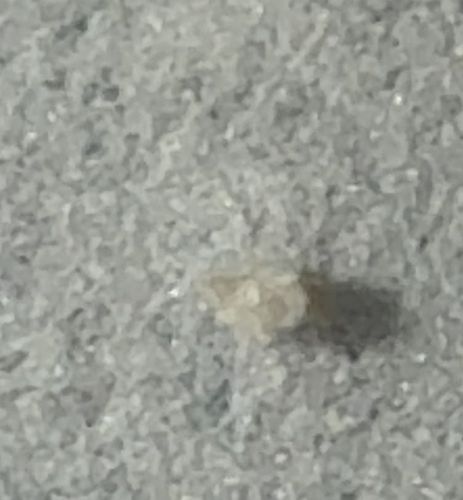
Phasteroidea / Plaster Bagworm (Larva/Case)
Phereoeca uterella / Praececodes atomosella
- Order & Family
- Order: Lepidoptera, Family: Tineidae (Clothes Moths)
- Size
- Larval case is roughly 8-13 mm (0.3-0.5 inches) long and resembles a flat, pumpkin seed-shaped patch of dust.
Natural Habitat
Typically found indoors in warm, humid climates, clinging to walls, baseboards, or under furniture. They seek out spider webs or crevices.
Diet & Feeding
Detritivore; feeds on spider silk, old spider webs, shed insect skins, pet hair, woolen fibers, and general household dust/lint.
Behavior Patterns
The larva constructs a protective casing (bag) out of silk and debris (sand, dust, fibers) which it carries around. It has openings at both ends of the case, allowing it to turn around inside and feed from either end. It drags this case along walls and floors.
Risks & Benefits
Benefits: Can clean up cobwebs and dead insects. Risks: Generally considered a nuisance pest rather than dangerous. They do not bite or sting humans, but in large numbers, they may damage woolen fabrics, similar to other clothes moths.