
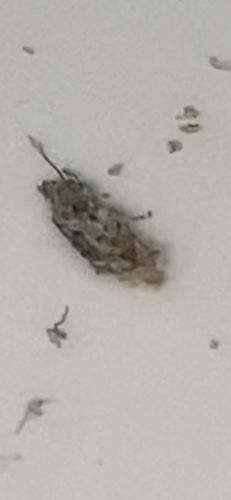
Household Casebearer (Plaster Bagworm)
Phereoeca uterella
- Order & Family
- Order Lepidoptera, Family Tineidae
- Size
- 8 mm to 14 mm in length (larval case)
Natural Habitat
Found inside houses, buildings, and under eaves. They prefer humid environments and are typically found on walls or floors where dust and cobwebs accumulate.
Diet & Feeding
Larvae feed on spider webs, wool, human hair, dust, and natural fibers such as silk.
Behavior Patterns
The larva builds a flattened, spindle-shaped case from silk, sand, dust, and lint. It lives inside this case, poking its head out to eat or move, and can turn around inside to emerge from either end. They eventually pupate inside the case before emerging as small, brown-gray moths.
Risks & Benefits
They are considered a minor household pest because they can damage silk or wool fabrics. They are not harmful to humans or pets and do not bite or sting. In the ecosystem, they act as scavengers of organic debris.