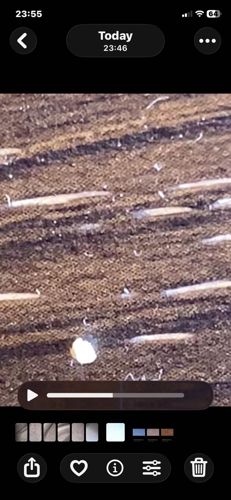
Flea Larvae
Scientific Name: Ctenocephalides felis (or Ctenocephalides canis)
Order & Family: Order: Siphonaptera, Family: Pulicidae
Size: 2mm to 5mm in length
Natural Habitat
Typically found in carpets, pet bedding, floor cracks, or upholstery where host animals rest; they prefer dark, humid environments.
Diet & Feeding
They feed on organic debris such as dead skin cells, hair, and most importantly, "flea dirt" (the dried adult flea excrement containing digested blood).
Behavior Patterns
Larvae are photophobic (they move away from light) and often burrow deep into fibers. This stage lasts about 5 to 11 days before they spin a cocoon and enter the pupae stage.
Risks & Benefits
Risks: These represent a developing infestation of fleas in the home, which leads to biting and irritation for pets and humans. They can also transmit tapeworms if ingested by pets during grooming. There are no ecological benefits in a household setting.
Identified on: 1/1/2026