
Community identification
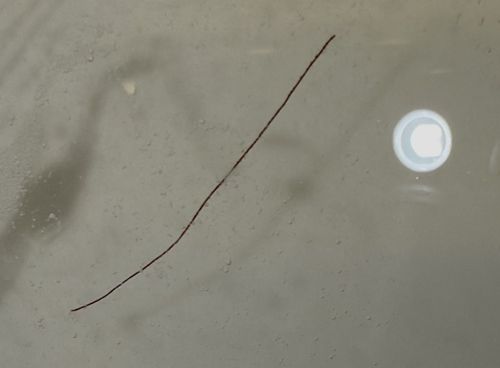
Horsehair Worm (also known as Gordian Worm)
Nematomorpha (Phylum)
- Order & Family
- Order: Gordioidea, Family: Gordiidae (among others)
- Size
- Typically 10 to 70 cm (4 to 28 inches) in length, but extremely thin (1-3 mm in diameter)
Natural Habitat
Adults are aquatic and found in puddles, troughs, streams, and swimming pools. Larvae are internal parasites of terrestrial insects like crickets, grasshoppers, and cockroaches.
Diet & Feeding
Adults do not feed; their only function is reproduction. Larvae absorb nutrients directly from their insect hosts.
Behavior Patterns
They are famous for twisting themselves into intricate knots, hence the name 'Gordian worm.' As parasites, the larvae manipulate their insect host's behavior, compelling them to seek water so the adult worm can emerge.
Risks & Benefits
Harmless to humans, pets, and plants. They serve a beneficial ecological role as a natural biological control by parasitizing and killing common pests like crickets, cockroaches, and grasshoppers.