
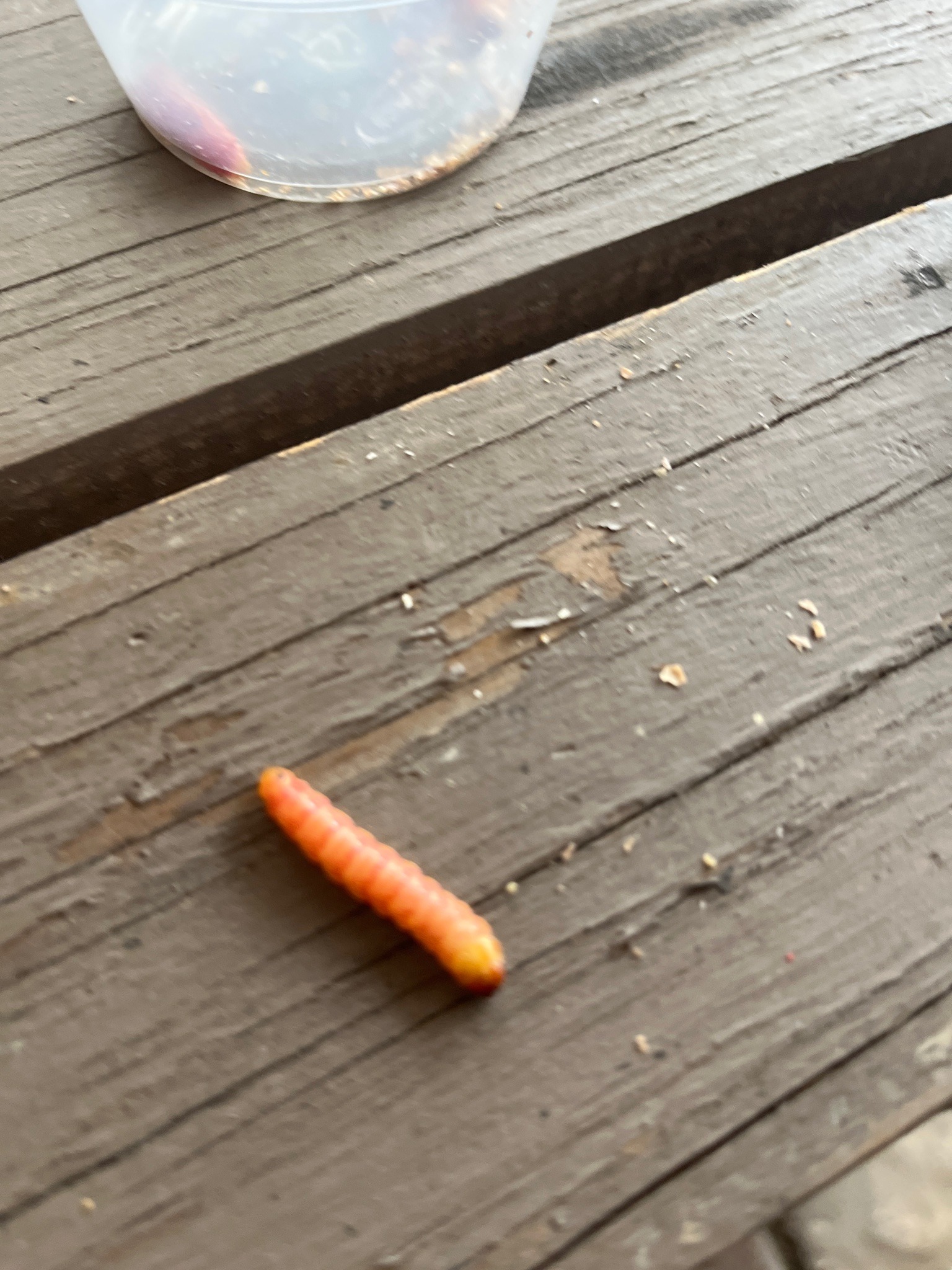
Community identification
Waxworm
Achroia grisella or Galleria mellonella
- Order & Family
- Lepidoptera: Pyralidae
- Size
- 20–30 mm (approx. 0.8–1.2 inches) in length
Natural Habitat
Honeybee nests, bird nests, and commercial breeding facilities; often found in storage areas with dried foods.
Diet & Feeding
Opportunistic scavengers that eat honeycomb, wax, pollen, shed bee skins, and cocoons; laboratory strains are often fed a diet of honey and bran.
Behavior Patterns
They are the larval stage of the wax moth. They are highly active borers that can cause significant damage to beeswax combs. They undergo several molts before spinning a silk cocoon for pupation.
Risks & Benefits
Risks: Major pest to beekeeping industry as they destroy honeycomb. Benefits: Widely used as live food for reptilian and avian pets; researchers have discovered they can biodegrade polyethylene (plastic).