
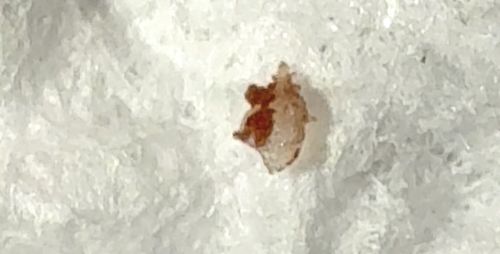
Lace Bug (specifically likely an Azalea Lace Bug based on coloring)
Stephanitis pyrioides (for Azalea Lace Bug)
- Order & Family
- Hemiptera (Order), Tingidae (Family)
- Size
- 3 to 4 mm in length (adults)
Natural Habitat
Typically found on the undersides of leaves of host plants such as azaleas, rhododendrons, and mountain laurels. They can accidentally fall onto people or surfaces.
Diet & Feeding
Plant sap suckers; they feed by piercing the undersides of leaves, causing stippling (tiny white or yellow dots) on the upper leaf surface.
Behavior Patterns
They are semi-transparent with lace-like wings. They are known to remain on leaf undersides through multiple generations per year. Overwintering occurs as eggs embedded in leaf tissue.
Risks & Benefits
Risks: They are significant plant pests, causing aesthetic damage and stress to ornamental plants. While they are not venomous or parasitic to humans, they are known to occasionally bite humans if they land on skin, causing minor irritation.