
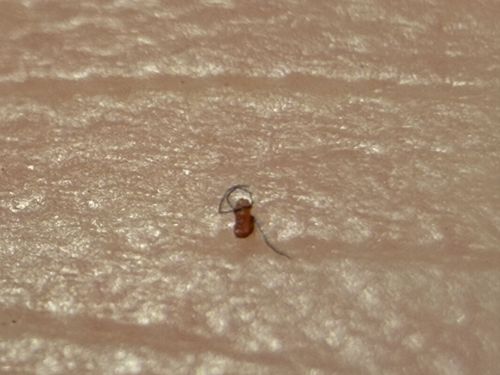
Community identification
Dog Flea (though closely resembles the Common Cat Flea)
Ctenocephalides canis
- Order & Family
- Order: Siphonaptera, Family: Pulicidae
- Size
- 1.0 to 4.0 mm in length
Natural Habitat
Found worldwide, primarily living on domestic dogs and wild canines, but also inhabits indoor environments like carpets, bedding, and floor cracks where hosts frequent.
Diet & Feeding
Hematophagous (blood-feeders). Adults feed on the blood of mammals, while larvae feed on organic debris and 'flea dirt' (adult flea excrement).
Behavior Patterns
They are wingless, saltatorial (jumping) insects that utilize powerful hind legs to latch onto hosts. They undergo complete metamorphosis (egg, larva, pupa, adult) and are active year-round in indoor environments.
Risks & Benefits
Risks include skin irritation, allergic dermatitis, and the transmission of parasites such as the double-pored dog tapeworm (Dipylidium caninum). They offer no known benefits to the ecosystem or humans.