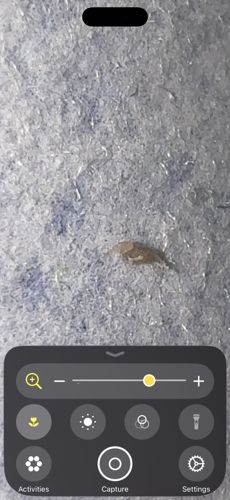
Psocid (also known as Booklouse)
Scientific Name: Liposcelis spp.
Order & Family: Order Psocodea (formerly Psocoptera), family Liposcelididae
Size: 1 - 2 mm in length (extremely small)
Natural Habitat
High-humidity environments indoors, such as kitchens, bathrooms, damp basements, or areas with paper, starch, or grains.
Diet & Feeding
Feeds on microscopic fungi, mold, mildew, book glue, and starchy food products.
Behavior Patterns
Naturally gregarious and move in jerky, rapid bursts. They do not bite or sting but proliferate rapidly in humid conditions.
Risks & Benefits
Generally harmless to humans but can be a nuisance in large numbers. Their presence usually indicates a moisture or humidity problem that may lead to mold growth.
Identified on: 12/30/2025