
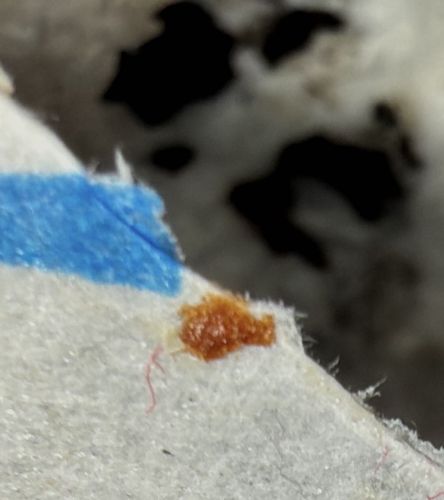
Pharaoh Ant (likely a discarded pupal case or debris, identification uncertain due to image quality)
Monomorium pharaonis (tentative ID)
- Order & Family
- Hymenoptera: Formicidae
- Size
- 1.5 to 2 mm long (workers)
Natural Habitat
Indoor environments, particularly heated buildings like hospitals, office blocks, and apartment buildings. They nest in voids, wall spaces, and between sheets of paper or linens.
Diet & Feeding
Omnivorous; they feed on sweets (sugar, honey, jelly), proteins (grease, meat, dead insects), and are known to gnaw on silk and rayon.
Behavior Patterns
Pharaoh ants are notorious for 'budding,' where a single colony splits into multiple new colonies, making them difficult to control. They form trails to food sources and are active year-round in heated structures.
Risks & Benefits
Risks: Major nuisance pest; they can contaminate sterile equipment in hospitals and spread pathogenic bacteria like Salmonella and Streptococcus. They do not sting but can bite if threatened. Benefits: Limited ecological role as scavengers in their native tropical range.