
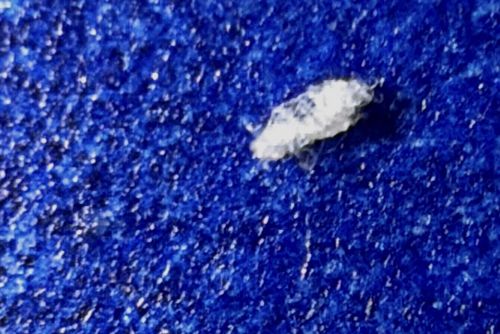
Mealybug (or a Mealybug-like insect)
Pseudococcidae (Family)
- Order & Family
- Order: Hemiptera, Family: Pseudococcidae
- Size
- 1 to 4 mm in length (females are usually larger than males)
Natural Habitat
Typically found on plants in warm, moist climates, greenhouses, or indoors on houseplants. They prefer concealed areas like leaf axils or undersides of leaves.
Diet & Feeding
They feed on plant sap (phloem) by piercing plant tissues with their needle-like mouthparts. They excrete a sticky substance called honeydew.
Behavior Patterns
They are slow-moving or stationary insects that often congregate in colonies. They produce a white, waxy, cotton-like substance for protection. They are known to have a mutualistic relationship with ants.
Risks & Benefits
Risks: Major agricultural and horticultural pests. They weaken plants, cause yellowing and leaf drop, and their honeydew promotes the growth of sooty mold. Benefits: Generally considered pests, though they are part of the food web for predators like ladybugs and lacewings.