
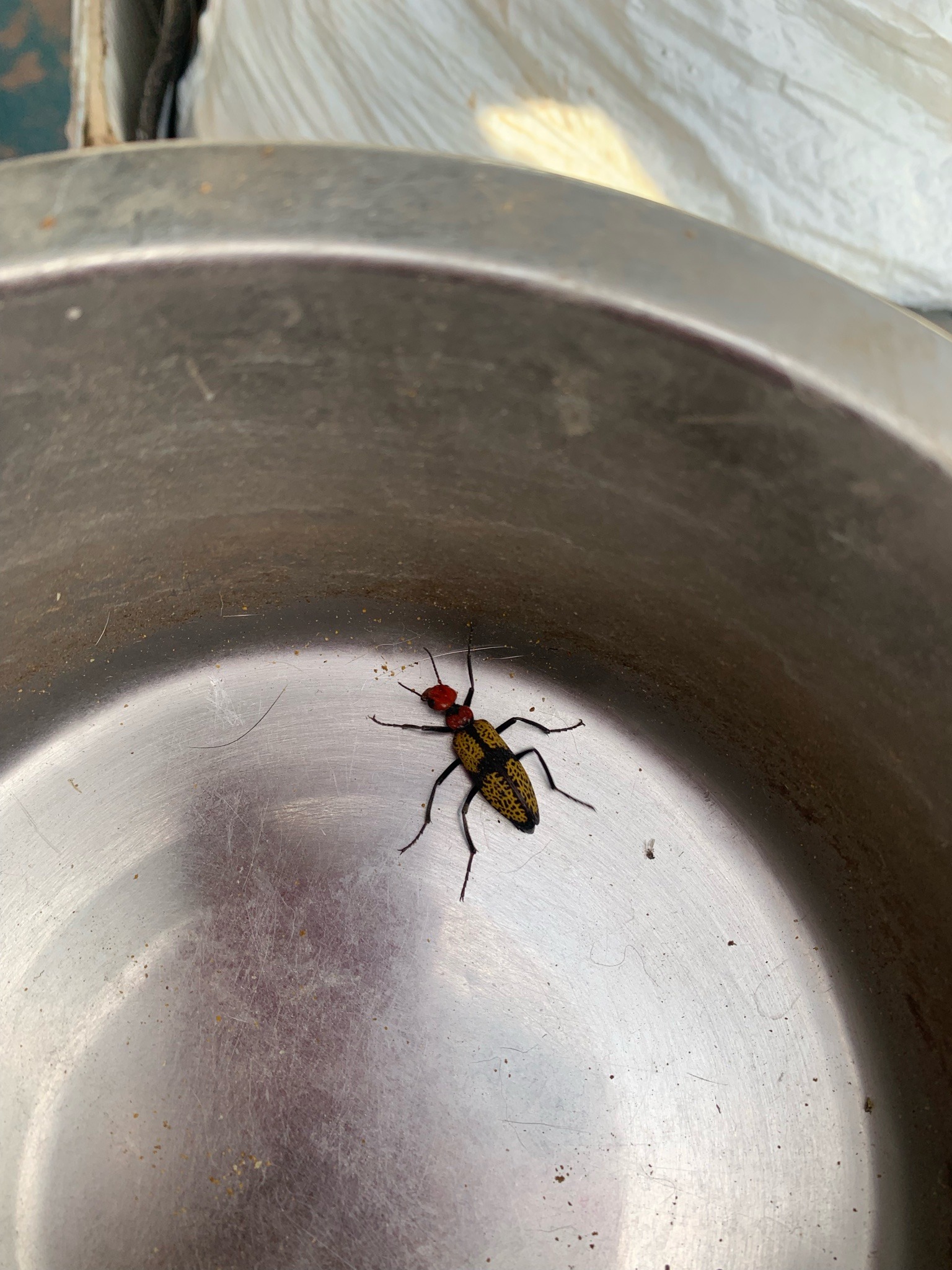
Iron Cross Blister Beetle
Tegrodera aloga
- Order & Family
- Coleoptera; Meloidae
- Size
- 20 to 35 mm (approx. 0.8 to 1.4 inches) in length.
Natural Habitat
Arid desert regions, particularly the Sonoran and Mojave deserts of the Southwestern United States and Northern Mexico.
Diet & Feeding
Adults feed on the foliage and flowers of desert plants such as Alfalfa and Palo Verde; larvae are specialized predators that feed on the eggs of ground-nesting bees.
Behavior Patterns
They are active during the day (diurnal) and often emerge in large numbers during the spring following winter rains. They undergo hypermetamorphosis, where the first larval stage is highly mobile to find host nests.
Risks & Benefits
Risks: They contain cantharidin, a potent toxin that causes severe skin blistering on contact and can be fatal to livestock (especially horses) if ingested in contaminated hay. Benefits: They help control certain bee populations as a natural part of the ecosystem.