
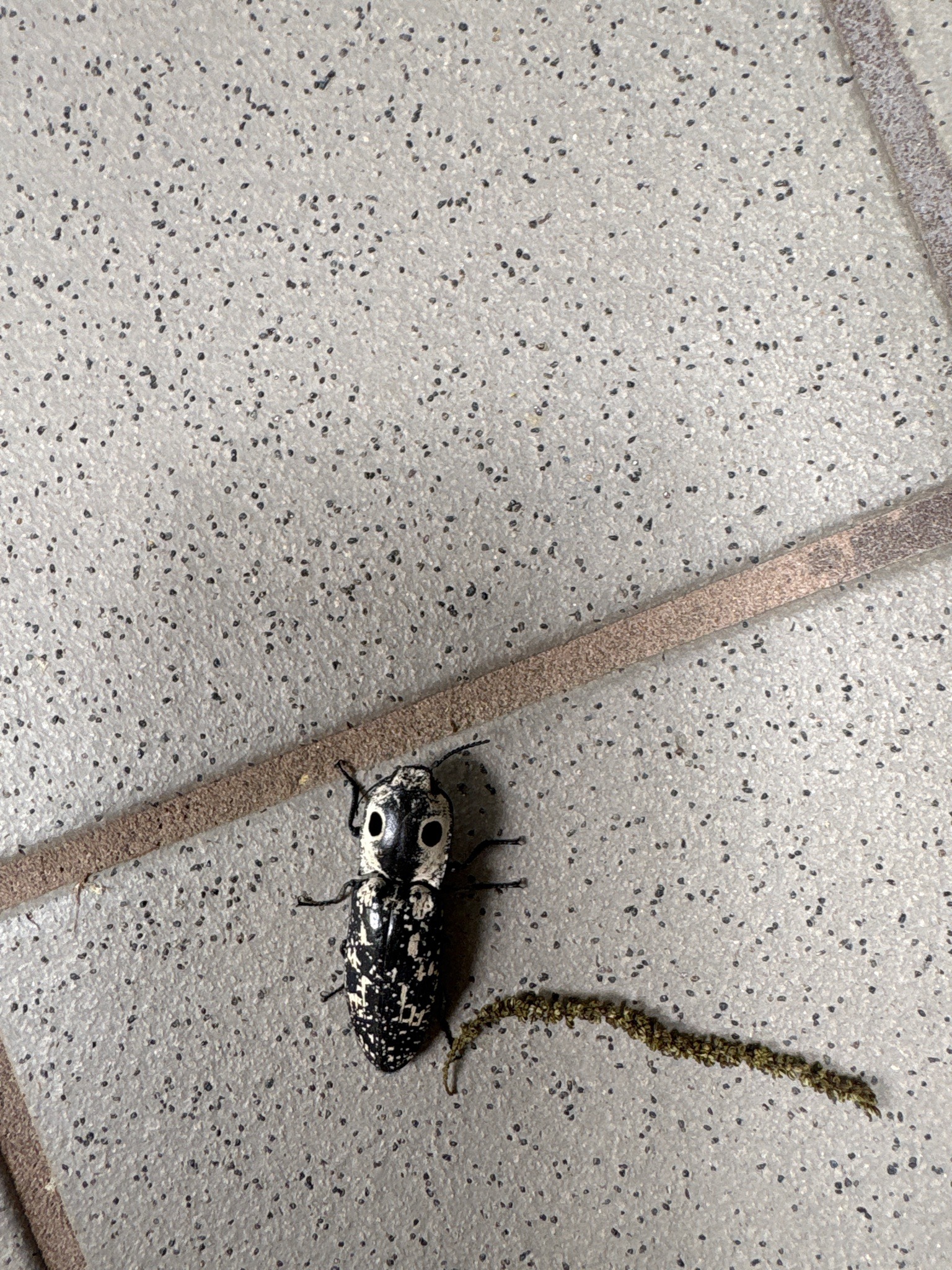
Community identification
Eastern Eyed Click Beetle
Alaus oculatus
- Order & Family
- Order: Coleoptera; Family: Elateridae
- Size
- 25–45 mm (1.0–1.8 inches) in length
Natural Habitat
Deciduous and mixed forests with plenty of rotting logs, typically across eastern North America.
Diet & Feeding
Adults may eat nectar or plant juices; larvae (wireworms) are predatory, feeding on the larvae of other wood-boring insects inside decaying wood.
Behavior Patterns
Features large, false 'eyespots' on the pronotum to discourage predators. Like other click beetles, it can snap its thorax and abdomen together to produce a 'click' sound and propel itself into the air to escape or right itself.
Risks & Benefits
Harmless to humans. Beneficial to the ecosystem as they help decompose wood and their larvae prey on wood-boring pests likes long-horned beetle larvae.