
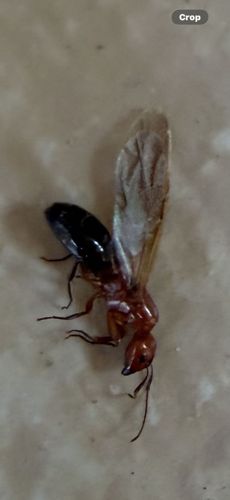
Carpenter Ant Queen (Alate)
Camponotus vicinus (or related species)
- Order & Family
- Order: Hymenoptera; Family: Formicidae
- Size
- 15 mm to 20 mm (Queens are significantly larger than workers)
Natural Habitat
Typically found in forests or residential areas; they nest in damp, decaying wood, logs, hollow tree trunks, or within the structural wood of buildings.
Diet & Feeding
Omnivorous; they eat honeydew produced by aphids, plant juices, and other insects. They do not eat wood, but rather excavate it to create nests.
Behavior Patterns
This is a winged reproductive female (alate) that emerges during 'nuptial flights' to mate and establish a new colony. Once mated, she will shed her wings and search for a suitable nesting site. They are most active at night.
Risks & Benefits
Benefits: They assist in the decomposition of old forest wood. Risks: They can cause significant structural damage to homes by tunneling through wood. They do not sting but can deliver a painful bite and spray formic acid into the wound.