
Community identification
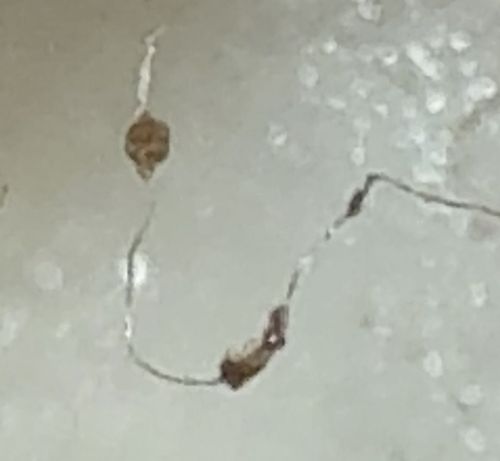
Review necessary - Image unclear but suggestive of a burrowing mite or thread
Sarcoptes scabiei (Possible match for a burrow) or Artifact
- Order & Family
- Sarcoptiformes; Sarcoptidae
- Size
- Microscopic (0.3-0.4 mm for adult females); burrows can be a few millimeters to a centimeter long.
Natural Habitat
If parasitic: human skin (epidermis). If environmental: likely not an insect but debris.
Diet & Feeding
If a scabies mite: feeds on dissolved tissue and fluid within the skin layers.
Behavior Patterns
If scabies: The female mite burrows into the upper layer of the skin (stratum corneum) to lay eggs, creating a distinctive wavy, thread-like tunnel often visible on the surface.
Risks & Benefits
Risks: Highly contagious, causing intense itching and rash (scabies). Requires medical treatment. Benefits: None.