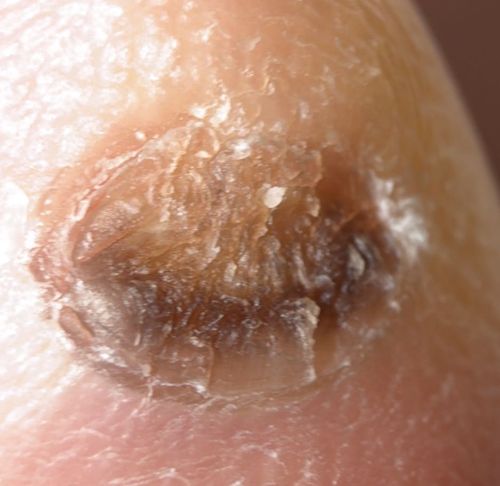
Tungiasis (Jigger flea embedded in skin)
Scientific Name: Tunga penetrans
Order & Family: Siphonaptera: Tungidae
Size: 1 mm (free-living flea) to 5-10 mm (engorged female embedded in skin)
Natural Habitat
Warm, sandy soil in tropical and sub-tropical climates (found in Central/South America, the Caribbean, sub-Saharan Africa).
Diet & Feeding
Hematophagous (blood-feeding); females burrow into mammalian skin to feed and lay eggs.
Behavior Patterns
The female flea burrows into the host's skin (usually feet), where she swells enormously while developing eggs, causing inflammation, pain, and itching. The flea eventually releases eggs and dies.
Risks & Benefits
Risks: Causes severe skin inflammation, lesions, intense itching, pain, and susceptibility to secondary bacterial infections (tetanus, gangrene). Benefits: None known to humans or ecosystems outside of being a parasite.
Identified on: 2/20/2026