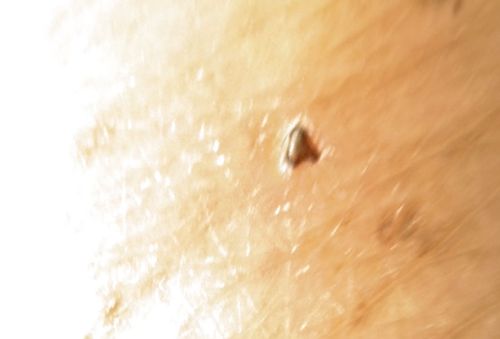
Tick (likely a Dog Tick or similar hard tick)
Scientific Name: Ixodida (Order); specific species hard to identify due to blur, possibly Dermacentor variabilis (American Dog Tick) or similar
Order & Family: Order: Ixodida; Family: Ixodidae (Hard Ticks)
Size: Unfed: 3-5mm; Engorged (after feeding): up to 10-15mm
Natural Habitat
Tall grasses, wooded areas, shrubs, leaf litter, and clearings where mammals frequently pass.
Diet & Feeding
Hematophagous (blood-feeding); they parasitize mammals (including humans and dogs), birds, reptiles, and amphibians.
Behavior Patterns
Ticks engage in 'questing,' where they perch on the ends of grass blades with front legs extended, waiting for a host to brush past. Once attached, they bury their mouthparts into the skin to feed for several days.
Risks & Benefits
Risks: Major vectors for diseases such as Lyme disease, Rocky Mountain spotted fever, and tularemia. Their bites can cause skin irritation or allergic reactions. Benefits: Minimal direct benefits to humans, but they serve as a food source for some birds, reptiles, and amphibians in the ecosystem.
Identified on: 2/7/2026