Pinworm
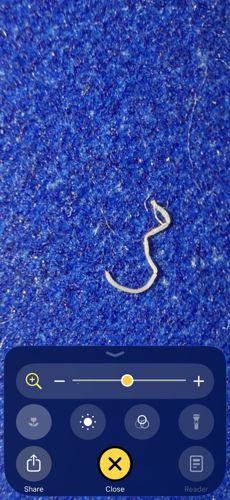
Scientific Name: Enterobius vermicularis
Order & Family: Order: Oxyurida, Family: Oxyuridae
Size: Females: 8–13 mm long; Males: 2–5 mm long.
Natural Habitat
The human large intestine (specifically the cecum and appendix); eggs are typically found on perianal skin and contaminated surfaces or fabrics.
Diet & Feeding
Feeds on intestinal contents and mucosal secretions within the host's colon.
Behavior Patterns
The female migrates out of the anus at night to deposit thousands of eggs on the surrounding skin, causing intense itching. Eggs become infectious within hours and are spread via the fecal-oral route.
Risks & Benefits
Risks include enterobiasis (pinworm infection), characterized by perianal itching, sleep disruption, and secondary skin infections from scratching. No known benefits to the host or ecosystem.
Identified on: 12/30/2025