
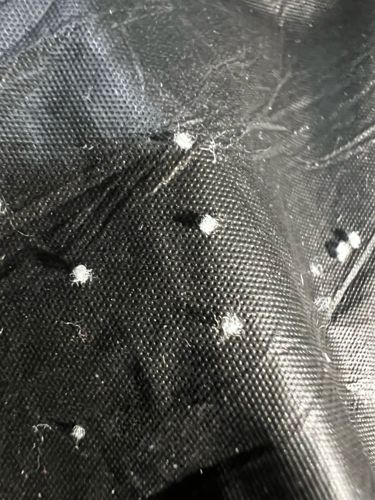
Mold Mite (also known as Grain Mite or Tyroglyphid Mite)
Tyrophagus putrescentiae
- Order & Family
- Order: Sarcoptiformes, Family: Acaridae
- Size
- 0.3–0.45 mm (0.012–0.018 inches)
Natural Habitat
High-humidity environments with high fat or protein content; often found on stored foods, grains, cheese, and damp indoor surfaces where mold grows.
Diet & Feeding
Primarily feeds on fungi (mold) and yeasts, but also consumes high-protein organic material like grain germs, cheese, and dried meats.
Behavior Patterns
They prefer very high humidity (above 70%) and can reproduce rapidly in these conditions. When appearing in large numbers, they look like a moving 'dust' or white powder. They spread through the movement of contaminated products or by air currents.
Risks & Benefits
They do not bite or sting humans, but they can cause allergic reactions ('grocer's itch') and respiratory issues if inhaled in large quantities. In the ecosystem, they help decompose organic material, but indoors they are considered a pest that ruins stored food products.