
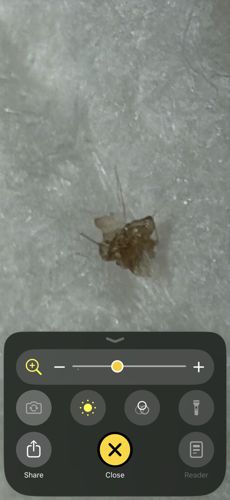
Lace Bug / Azalea Lace Bug (probable)
Stephanitis pyrioides
- Order & Family
- Hemiptera (Order), Tingidae (Family)
- Size
- Very small; adults are approximately 3 to 4 mm (about 1/8 inch) in length.
Natural Habitat
Typically found on the undersides of leaves of host plants, most commonly azaleas, rhododendrons, and mountain laurels. They thrive in sunny, dry conditions.
Diet & Feeding
They feed on plant sap by piercing the leaf tissue with their sucking mouthparts, extracting chlorophyll and causing a stippled or bleached appearance on the leaf surface.
Behavior Patterns
Adults overwinter in leaf litter or bark crevices. Females lay eggs inside the leaf tissue along veins. Both nymphs and adults are sedentary feeders, often found in clusters on leaf undersides leaving characteristic tar-like fecal spots.
Risks & Benefits
Risks: They are a significant pest for ornamental plants like azaleas, causing aesthetic damage (yellowing/whitening leaves) and potentially weakening the plant heavily. They do not bite or harm humans directly, though they can be a nuisance.