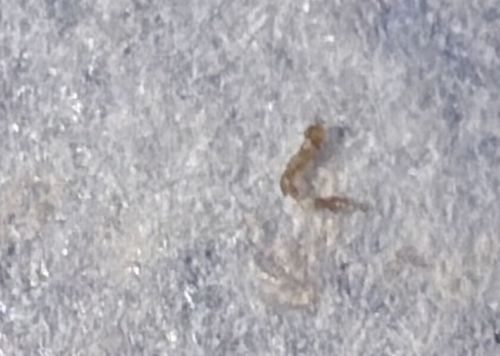
Booklouse (or Psocid)
Scientific Name: Liposcelis spp. (Common genus, precise species difficult without microscope)
Order & Family: Psocodea: Liposcelididae
Size: Very small, typically 1 mm to 2 mm in length.
Natural Habitat
Found in warm, damp environments with high humidity like bathrooms, basements, libraries, or cupboards.
Diet & Feeding
They feed on microscopic mold, fungi, starch, glue (like in book bindings), and stored food products.
Behavior Patterns
They are wingless and move quickly in jerky bursts. They do not bite but can reproduce rapidly in humid conditions.
Risks & Benefits
Generally harmless to humans (they do not bite or spread disease). However, they can contaminate preserved food and damage books or wallpaper starches. Their presence often indicates a humidity or mold issue.
Identified on: 3/8/2026