
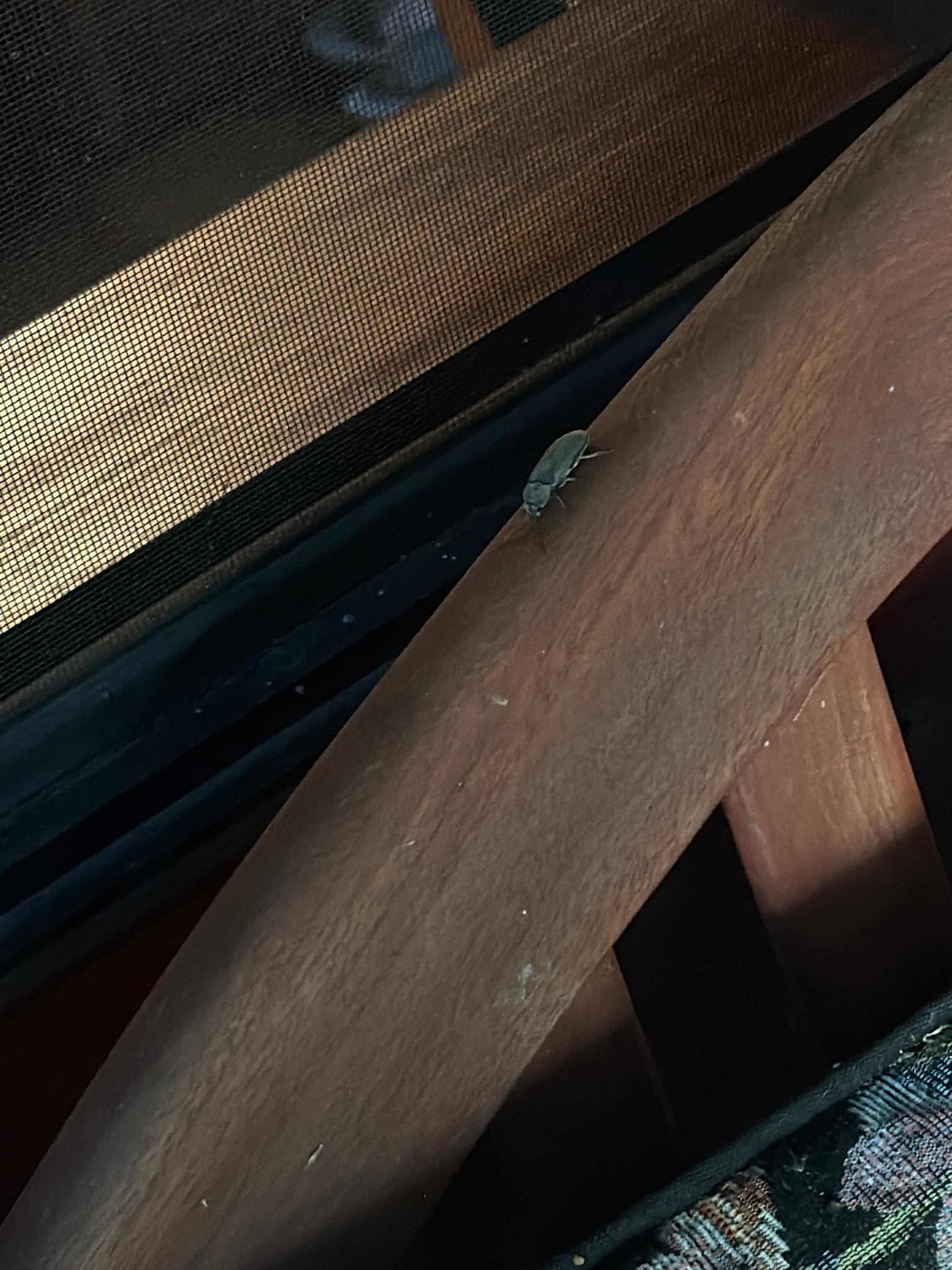
Community identification
Click beetle
Aeolus mellillus (variable species) or similar from family Elateridae
- Order & Family
- Order: Coleoptera; Family: Elateridae
- Size
- 12mm to 30mm (approx. 0.5 to 1.2 inches) depending on the specific genus
Natural Habitat
Commonly found in fields, gardens, and woodlands; they are often attracted to artificial lights at night and may enter homes through gaps or screens.
Diet & Feeding
Adults primarily eat nectar, pollen, or soft plant tissues; larvae (known as wireworms) live in soil or decaying wood, eating roots and seeds.
Behavior Patterns
Known for a unique 'clicking' mechanism; when turned on their backs, they use a thoracic spine to snap and propel themselves into the air to right themselves or escape predators.
Risks & Benefits
Harmless to humans as they do not bite or sting. In the ecosystem, they aid in decomposition, though larval 'wireworm' stages can occasionally damage crops or garden plants.