
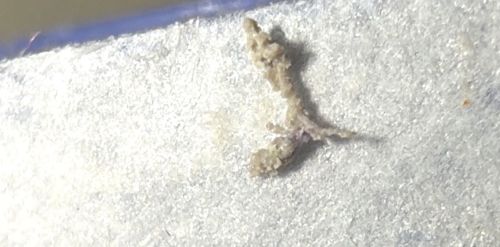
Plaster Bagworm (or Household Casebearer)
Phereoeca uterella
- Order & Family
- Order: Lepidoptera, Family: Tineidae
- Size
- Larval case is typically 8-13 mm long (about half an inch).
Natural Habitat
Commonly found indoors on walls, especially in humid climates like Florida. They often hang around baseboards, in closets, under furniture, or in spider webs.
Diet & Feeding
Larvae feed on spider webs, wool, hair, old insect skins, dead insects, and general household dust and lint.
Behavior Patterns
The larva constructs a flat, pumpkin-seed-shaped protective case made of silk and camouflaged with debris (sand, soil, lint, paint fragments). It drags this case around as it moves. Before pupating, they often climb walls to attach their case in a high, hidden spot.
Risks & Benefits
Generally harmless to humans (they do not bite or sting). They are considered a minor household pest because they can damage woolen fabrics and rugs, though they primarily eat cobwebs and dust. Their presence often indicates high humidity or a buildup of spiderwebs/dust.