
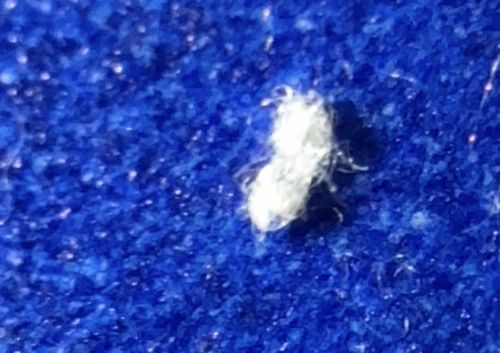
Woolly Aphid
Eriosomatinae (Subfamily)
- Order & Family
- Hemiptera (Order), Aphididae (Family)
- Size
- 1 to 7 mm (very small)
Natural Habitat
Typically found on trees and shrubs, including apple, elm, ash, and various ornamental plants. They often cluster on twigs, branches, or leaves.
Diet & Feeding
They feed on plant sap by inserting needle-like mouthparts into the plant tissue. Different species prefer different host plants.
Behavior Patterns
Groups congregate together creating large, white, cottony masses that resemble mold or wool. They secrete waxy white strands for protection against predators and moisture loss. Some species have complex life cycles alternating between two host plants.
Risks & Benefits
Risks: Can cause cosmetic damage to plants, form galls, yellow leaves, and stunt growth (especially in young trees). They produce honeydew which promotes sooty mold. Benefits: They serve as a food source for natural predators like ladybugs, lacewings, and parasitic wasps.