
Community identification
Scabies Mite (or Human Itch Mite)
Sarcoptes scabiei var. hominis
- Order & Family
- Order: Sarcoptiformes, Family: Sarcoptidae
- Size
- Microscopic; adult females are 0.30–0.45 mm long and 0.25–0.35 mm wide, while males are slightly smaller.
Natural Habitat
The epidermis (upper layer) of human skin, particularly in warm, moist areas like between fingers, wrists, armpits, and groins.
Diet & Feeding
They feed on human skin cells and fluids as they burrow beneath the surface.
Behavior Patterns
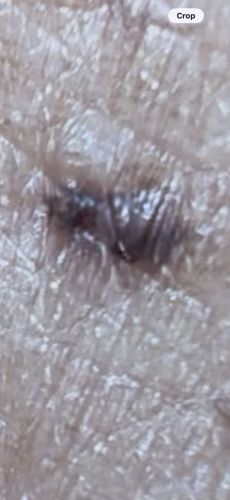
These mites burrow tunnel-like structures into the upper layer of the skin to live and deposit eggs. The burrowing activity is notoriously itchy, especially at night. They are highly contagious and spread through prolonged skin-to-skin contact.
Risks & Benefits
Risks: Causes scabies, an intensely itchy skin infestation characterized by a pimple-like rash and visible burrows. Scratching can lead to secondary bacterial skin infections (like Staph). Benefits: None known to humans or ecosystems.