
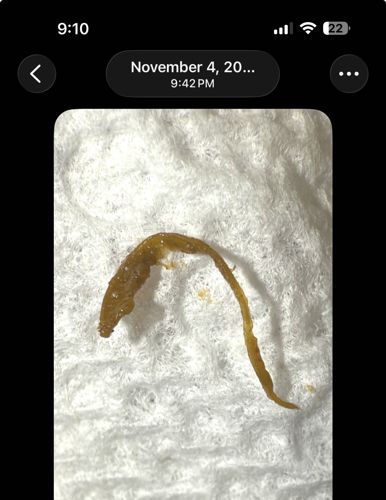
Rat-tailed Maggot
Eristalis tenax (larval stage)
- Order & Family
- Order: Diptera (Flies), Family: Syrphidae (Hoverflies)
- Size
- Body is typically 20-30mm long, breathing tube ('tail') can extend up to 150mm
Natural Habitat
Found in stagnant, oxygen-poor water rich in organic matter, such as liquid manure lagoons, sewage, polluted ditches, dairy farm runoff, and stagnant ponds.
Diet & Feeding
They feed on decaying organic matter and bacteria found in polluted water, acting as natural water filters.
Behavior Patterns
The most notable behavior is the use of their 'rat tail' (a telescoping breathing siphon) to reach the water's surface for air while remaining submerged. They eventually leave the water to pupate in drier soil before transforming into the adult drone fly.
Risks & Benefits
Benefits: The adult form (Drone Fly) is a significant pollinator. The larvae help decompose organic waste. Risks: While generally harmless to humans, accidental ingestion can very rarely cause intestinal myiasis, though this is uncommon.