
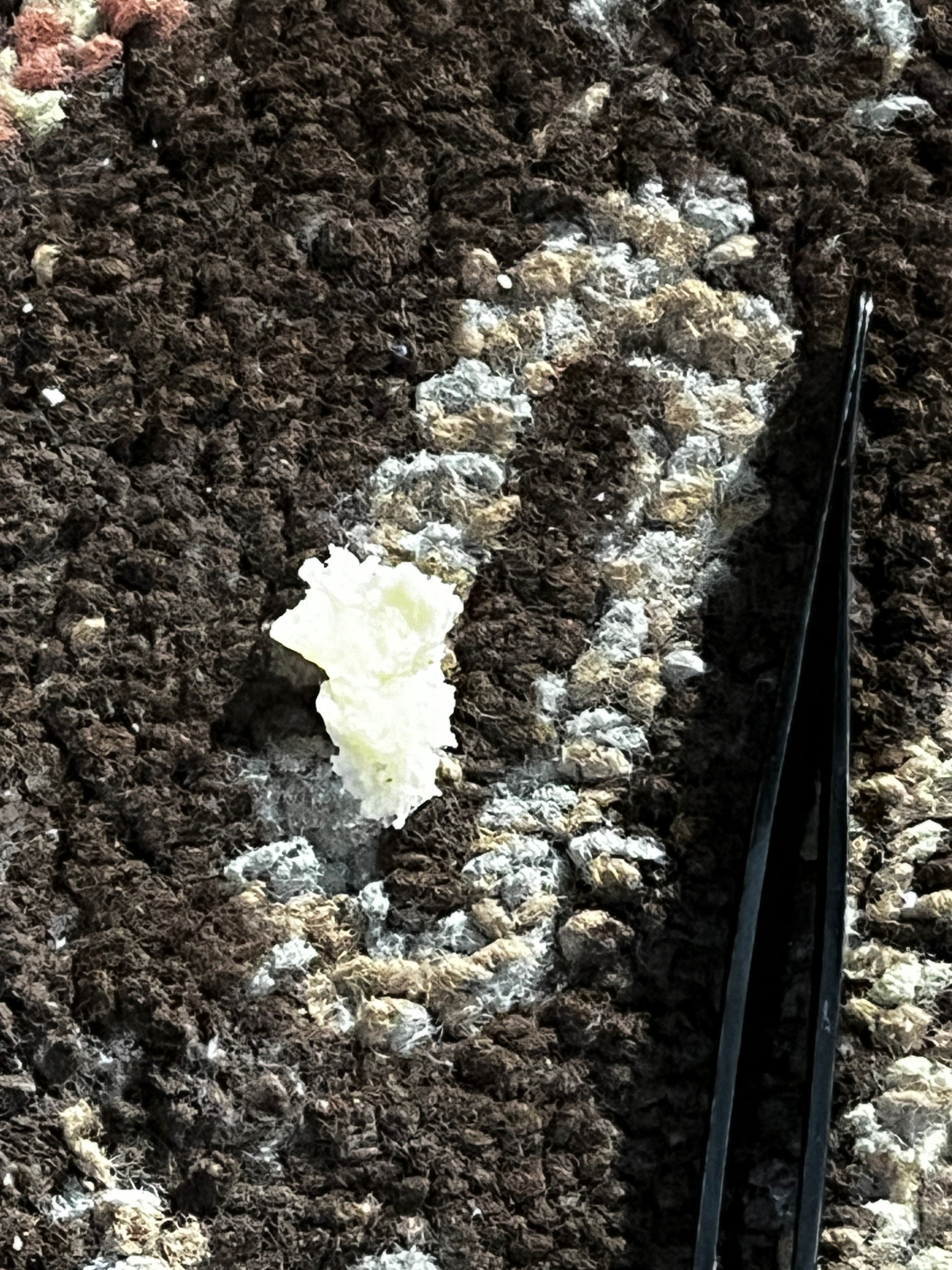
Community identification
Bagworm (likely in larval/pupal stage)
Psychidae family
- Order & Family
- Lepidoptera: Psychidae
- Size
- Case sizes typically range from 1 to 2 inches (2.5 to 5 cm) at maturity
Natural Habitat
The 'bags' are typically found attached to various trees and shrubs, including conifers like arborvitae, cedar, and juniper, as well as deciduous trees.
Diet & Feeding
Larvae are polyphagous, feeding on the foliage of over 100 species of trees and shrubs.
Behavior Patterns
Larvae construct a protective silk case covered with bits of host plant material and debris. They carry this case while feeding and eventually pupate inside it. Females are wingless and remain in the bag their whole life.
Risks & Benefits
Known as a significant defoliating pest; heavy infestations can weaken or kill host trees. They offer little benefit in garden environments, though they are part of the food web for birds and parasitic wasps.