Scabies Mite
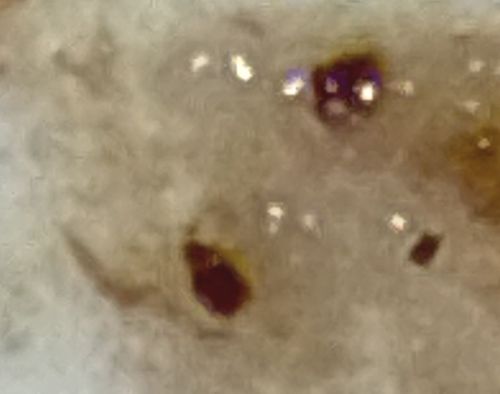
Scientific Name: Sarcoptes scabiei var. hominis
Order & Family: Order: Sarcoptiformes, Family: Sarcoptidae
Size: Microscopic; adult females are 0.30–0.45 mm long and 0.25–0.35 mm wide, while males are slightly smaller.
Natural Habitat
The epidermis (upper layer) of human skin; they burrow to live and deposit eggs.
Diet & Feeding
They feed on dissolved human tissues but do not feed on blood.
Behavior Patterns
These mites burrow tunnel-like structures into the skin to lay eggs. This burrowing triggers an intense allergic reaction (itching). They are transmitted primarily through prolonged, direct skin-to-skin contact.
Risks & Benefits
Risks: Causes scabies, an infestation characterized by intense itching (especially at night) and a pimple-like rash. Scratching can lead to secondary bacterial infections like impetigo. Benefits: None to humans or the general ecosystem.
Identified on: 2/28/2026