
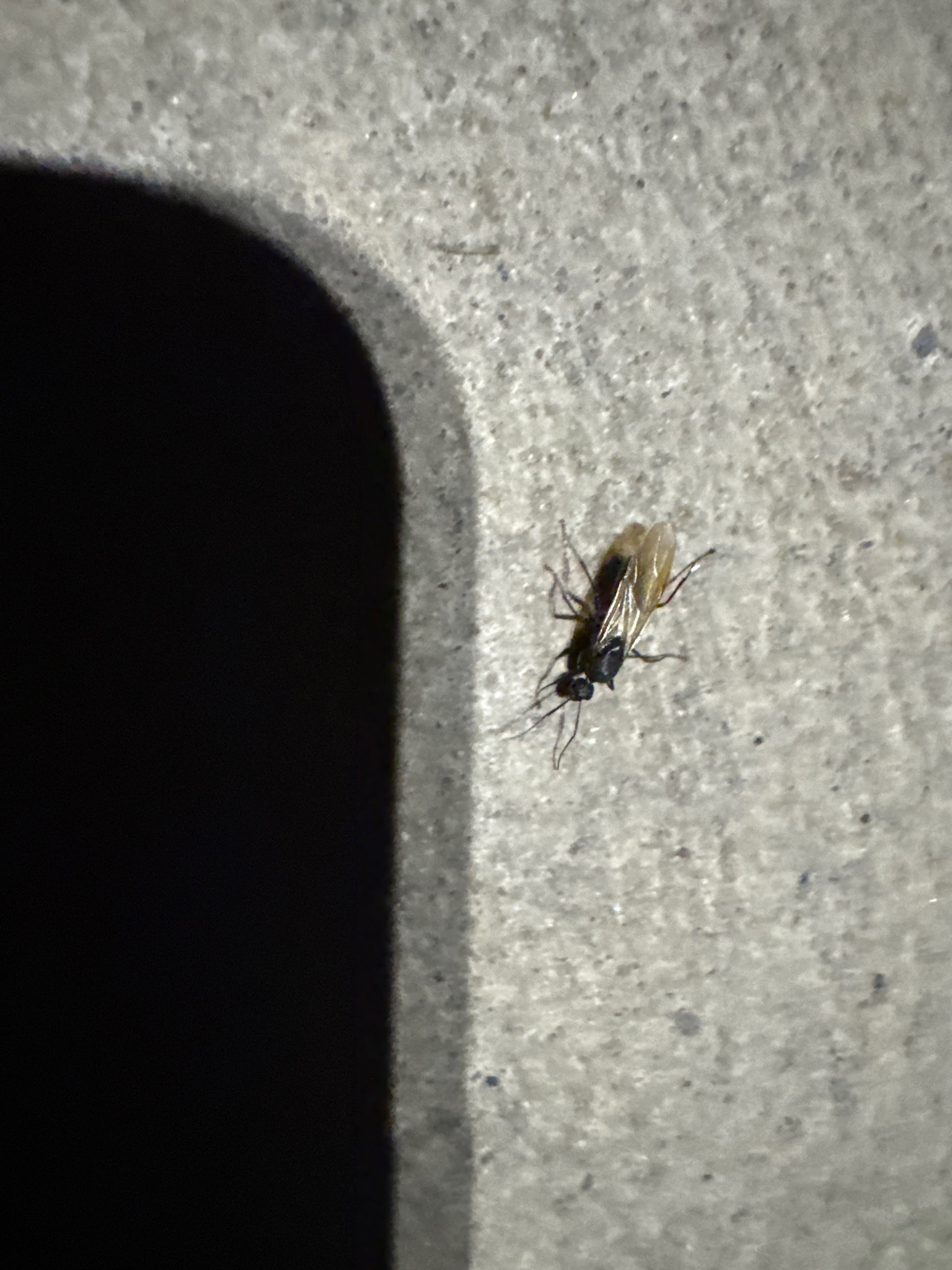
Community identification
Carpenter Ant Swarmer (Winged Alate)
Camponotus species
- Order & Family
- Order Hymenoptera, Family Formicidae
- Size
- Winged reproductives range from 9 to 18 mm (approx. 0.35 to 0.7 inches)
Natural Habitat
Nests are typically found in moist or decaying wood, such as tree stumps, logs, or structural timbers in buildings.
Diet & Feeding
Omnivorous; they eat honeydew produced by aphids, nectar, insects, and sugary or protein-rich food scraps in homes.
Behavior Patterns
The winged individuals are 'reproductives' that leave the parent colony in 'nuptial flights' to mate and start new colonies. They are most active at night or during twilight.
Risks & Benefits
Structural risk: They can cause significant damage to wooden structures by excavating galleries to house their colonies. Benefit: Historically, they play a crucial role in the ecosystem by breaking down dead and decaying wood.