
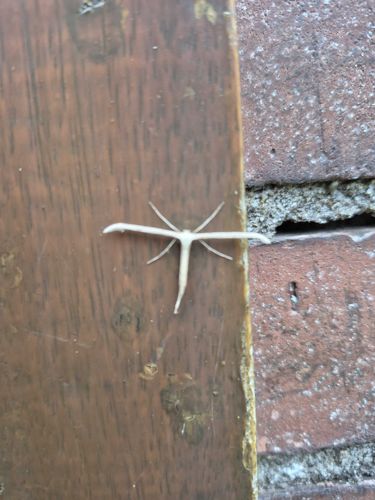
Community identification
White Plume Moth
Pterophorus pentadactyla
- Order & Family
- Lepidoptera, Pterophoridae
- Size
- Wingspan of 24–35 mm (approx. 1 to 1.4 inches).
Natural Habitat
Gardens, grasslands, dry marshes, and hedgerows with plenty of low-lying vegetation.
Diet & Feeding
Adults feed on plant nectar; larvae (caterpillars) feed primarily on the leaves of bindweed (Convolvulus) and morning glory.
Behavior Patterns
Chiefly nocturnal but easily disturbed from vegetation during the day. They have a distinctive 'T' shape when at rest, with wings tightly rolled and held at right angles to the body. They are most active from June to August.
Risks & Benefits
Harmless to humans. They provide ecological benefits as pollinators and serve as a food source for birds and bats. The larvae can help control the spread of bindweed, which is often considered an invasive weed.