
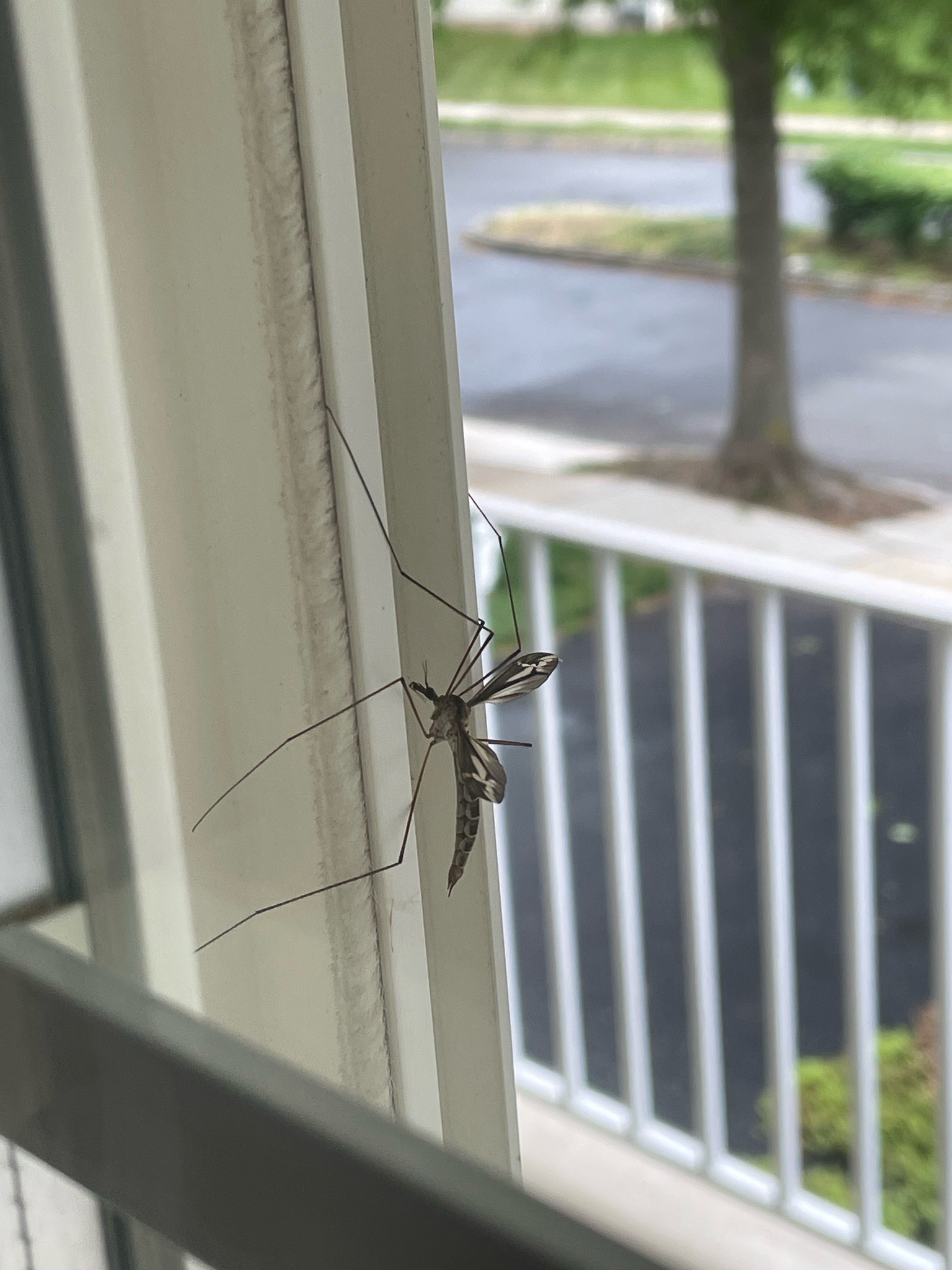
Community identification
Crane Fly
Tipulidae (Family)
- Order & Family
- Order Diptera, Family Tipulidae
- Size
- Varies by species; adults usually have a leg span of 2 to 6 cm (roughly 1 to 2.5 inches).
Natural Habitat
Typically found in moist environments, woodlands, and near bodies of water where larvae develop in soil or aquatic ecosystems.
Diet & Feeding
Adults primarily feed on nectar or do not eat at all during their short lifespan; larvae (leatherjackets) eat decaying organic matter, roots, and seedlings.
Behavior Patterns
Known for their clumsy flying and long, fragile legs. They are attracted to lights at night and go through a complete metamorphosis (egg, larva, pupa, adult).
Risks & Benefits
Harmless to humans as they do not bite or sting. They serve as a vital food source for birds, fish, and other wildlife. Some larvae can be minor lawn pests by feeding on grass roots.