Dog Tapeworm (Proglottid segment)
Scientific Name: Dipylidium caninum
Order & Family: Order: Cyclophyllidea / Family: Dipylidiidae
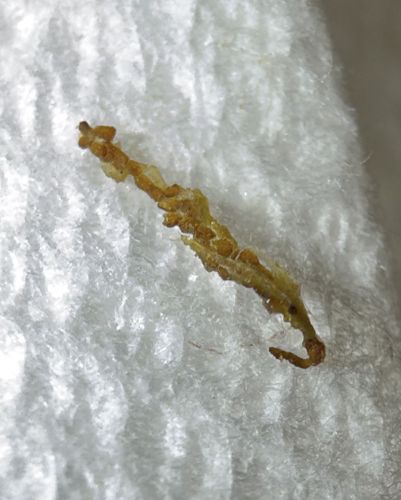
Size: Proglottids (segments) are typically 3-12 mm long and resemble grains of rice or cucumber seeds when fresh, shrinking and becoming yellowish-brown when dried.
Natural Habitat
Intestinal tract of dogs and cats (adults); fleas (intermediate host); commonly found on bedding, anal fur, or fresh feces as expelled segments.
Diet & Feeding
Absorbs nutrients directly through its skin from the host's intestinal contents.
Behavior Patterns
Adult worms release egg-filled segments (proglottids) that migrate out of the host's anus. These segments can move independently when fresh and eventually dry out, releasing eggs to be eaten by flea larvae.
Risks & Benefits
Risks: Can cause itching and irritation ('scooting') in pets; rarely infects humans (requires ingestion of infected flea). Benefits: None (parasitic).
Identified on: 3/9/2026