
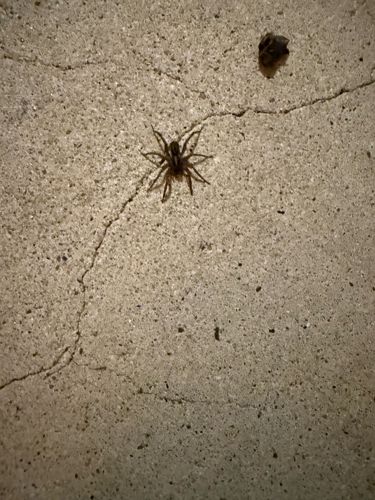
Community identification
Wolf Spider
Lycosidae family (genus often Hogna or Tigrosa)
- Order & Family
- Order: Araneae; Family: Lycosidae
- Size
- 10 to 35 mm (0.4 to 1.38 inches) in body length depending on species.
Natural Habitat
Grasslands, gardens, woodland floors, and occasionally inside homes or garages during cooler weather.
Diet & Feeding
Strictly carnivorous; they eat insects such as crickets, flies, and beetles, as well as other small spiders.
Behavior Patterns
Solitary, ground-dwelling hunters that do not spin webs to catch prey. They hunt using excellent eyesight and speed. Females are known for carrying their egg sacs attached to their spinnerets and carrying spiderlings on their backs.
Risks & Benefits
Benefits: Highly beneficial ecosystem controllers that eat pests. Risks: Low; they are not aggressive and generally flee from humans. Their venom is not medically significant to humans, though a bite can cause minor localized pain or itching.