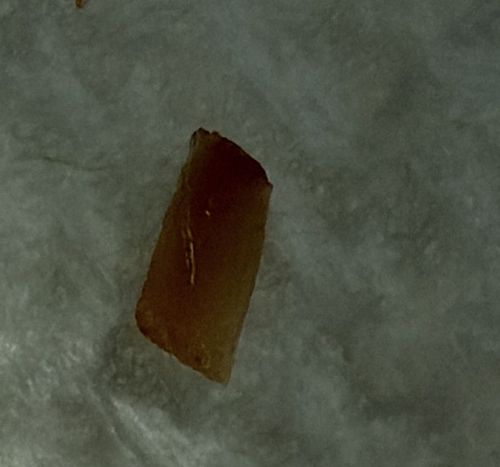
Tapeworm Segment (Likely Dipylidium caninum)
Scientific Name: Dipylidium caninum (most likely, given common household context)
Order & Family: Order: Cyclophyllidea, Family: Dipylidiidae
Size: Individual segments (proglottids) are typically 3-12 mm long and resemble grains of rice or cucumber seeds when fresh; they shrink and become harder/golden when dried.
Natural Habitat
Adults live in the intestines of hosts (dogs, cats, humans). Segments are often found in pet bedding, around the anus of pets, or on furniture where pets sleep.
Diet & Feeding
The adult tapeworm absorbs nutrients directly through its skin from the host's digested food in the intestine.
Behavior Patterns
The segment shown is a proglottid, which is an egg-filled packet shed by the adult worm. These segments are mobile when fresh and can crawl around the perianal area, causing itching. They eventually dry out (like the one pictured) and release egg packets which are ingested by flea larvae.
Risks & Benefits
Risk: Indicates an active parasitic infection in a household pet (or rarely a human). While generally not life-threatening, they cause discomfort, itching, and potential weight loss in the host. They are transmitted via the ingestion of infected fleas, not directly from the segment itself.
Identified on: 2/7/2026