
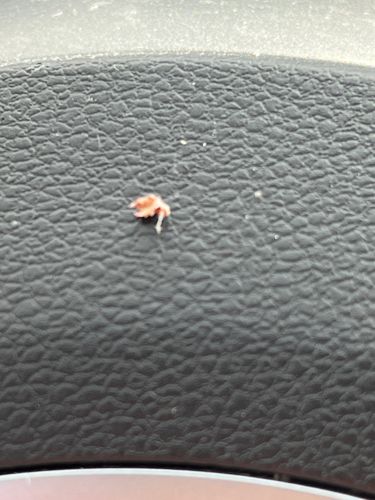
Community identification
Velvet Mite
Trombidiidae (family)
- Order & Family
- Order: Trombidiformes; Family: Trombidiidae
- Size
- 1 mm to 12 mm (the species in the image appears to be a smaller variety, around 2-4 mm).
Natural Habitat
Soil, leaf litter, forests, and gardens; often seen on sidewalks or tree trunks after it rains.
Diet & Feeding
Adults are predatory, feeding on small insects, insect eggs, and other mites. Larvae are often parasitic on other invertebrates.
Behavior Patterns
Active during the day, especially in damp conditions. They undergo a complex life cycle including egg, larva, several nymphal stages, and adult.
Risks & Benefits
Benefits: They are beneficial to the ecosystem as decomposers and predators of pests. Risks: Generally harmless to humans and pets, as they do not bite people; however, their bright color serves as a warning (aposematism) that they are distasteful to predators.