
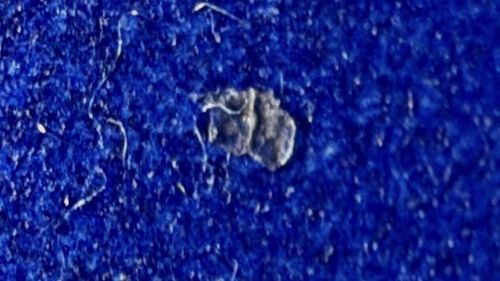
Household Casebearer (often specifically the Plaster Bagworm or similar clothes moth larva case)
Phereoeca uterella (or Tinea pellionella for Casemaking Clothes Moth)
- Order & Family
- Order: Lepidoptera, Family: Tineidae
- Size
- Larval case is typically about 6 mm to 12 mm (0.25 to 0.5 inches) long.
Natural Habitat
Typically found indoors in warm, humid climates; often seen on walls, in closets, corners, or underneath spider webs.
Diet & Feeding
Larvae feed on keratin (hair, wool, skin flakes), spider webs, general household dust/lint, and sometimes wool fibers.
Behavior Patterns
The larva constructs a silken protective shell (the 'case') that is flattened and pumpkin-seed-shaped, camouflaged with sand, paint chips, or fibers from the environment. It drags this home around with it. The creature inside can extend its head from either end of the case to crawl or eat.
Risks & Benefits
Risks: Generally considered a minor household pest because they can damage wool clothing and rugs, though usually less destructive than the pure Casemaking Clothes Moth. They are not harmful to human health (do not bite or sting). Benefits: They scavenge on old spider webs and dust, playing a small role as decomposers.