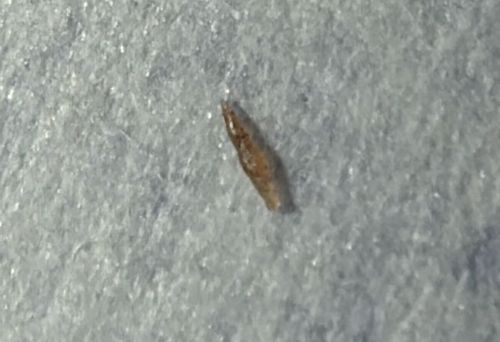
Bird Rung louse
Scientific Name: Typically from the family Philopteridae or Menoponidae (e.g., Menacanthus stramineus or Columbicola columbae)
Order & Family: Order: Phthiraptera (Lice), Family varies (commonly Philopteridae or Menoponidae)
Size: 1 mm to 6 mm long
Natural Habitat
Found in the plumage and on the skin of wild and domestic birds (especially poultry and pigeons). They are obligate parasites and cannot survive long off the host.
Diet & Feeding
Feeds on feathers, skin debris, dried scabs, and sometimes blood (depending on the specific species).
Behavior Patterns
These lice cling to bird feathers using specialized claws. Their entire life cycle (egg, nymph, adult) occurs on the host bird. They move rapidly through feathers to avoid preening.
Risks & Benefits
Risks: Can cause severe irritation, feather damage, weight loss, and anemia in infected birds; can be pests for poultry farmers. Benefits: None known; they are parasitic.
Identified on: 3/10/2026