
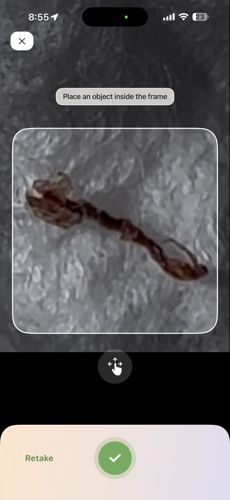
Earthworm (Desiccated/Dried Specimen)
Lumbricus terrestris (likely candidate for common earthworm)
- Order & Family
- Order: Crassiclitellata (formerly Haplotaxida); Family: Lumbricidae
- Size
- Living: 90–300 mm (3.5–11.8 in). Desiccated: Shrinks significantly in length and width, becoming a thin, hard, twisted strand.
Natural Habitat
Moist soil rich in organic matter. Often found dried out on sidewalks, driveways, or indoor floors (as seen in the image) after wandering out of soil during rain and failing to return before dehydrating.
Diet & Feeding
Detritivore; consumes decaying organic matter such as fallen leaves, dead roots, and soil microorganisms.
Behavior Patterns
Living worms burrow to aerate soil and surface during heavy rains. When trapped on a dry surface (like a carpet or pavement), they cannot regulate moisture and rapidly desiccate, turning into the dark, shriveled, jerky-like object shown in the photo.
Risks & Benefits
Benefits: Essential for soil health, aeration, and nutrient cycling. Risks: Completely harmless to humans and pets. They are not pests and do not infest homes; finding one inside is usually accidental.