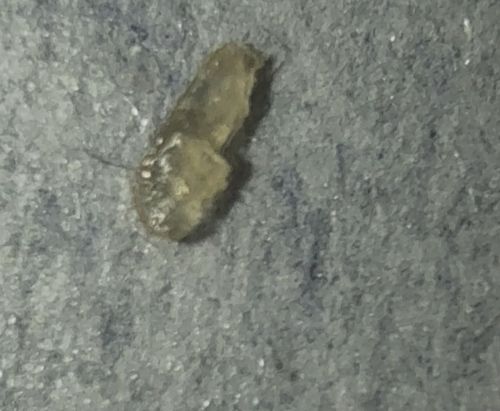
Tapeworm Segment (Proglottid)
Scientific Name: Dipylidium caninum (most common dog/cat tapeworm)
Order & Family: Cyclophyllidea / Dipylidiidae
Size: Segments are roughly the size of a grain of rice or slightly larger, approximately 3-12 mm long.
Natural Habitat
Intestines of host animals (usually dogs or cats); often found on pet bedding, carpet, or near a pet's anus when expelled.
Diet & Feeding
Parasitic; absorbs nutrients from the host's digested food through its skin (tegument) while living in the intestine.
Behavior Patterns
Adult tapeworms live in the intestine. They shed segments (proglottids) filled with eggs that exit via the host's feces. These segments can crawl around briefly after being expelled and dry out to resemble sesame seeds.
Risks & Benefits
Risks: Indicates a parasitic infection in a pet that requires veterinary treatment. While rare, humans (especially children) can be infected if they accidentally ingest an infected flea, which is the intermediate host. Benefits: None.
Identified on: 2/11/2026