
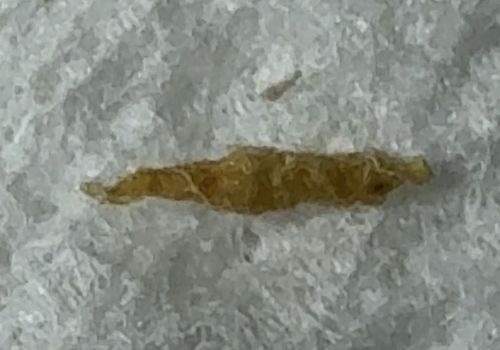
Phasteropeas Case-bearing Moth Larva (or Household Casebearer)
Phereoeca uterella (or Tineola bisselliella depending on region and specific casing style)
- Order & Family
- Order: Lepidoptera, Family: Tineidae (Tineid Moths)
- Size
- Typically about 7–13 mm (0.25 to 0.5 inches) long.
Natural Habitat
Often found indoors on walls, in closets, or on fabrics. They thrive in humid environments and prefer dark corners where they can feed on organic fibers.
Diet & Feeding
The larvae feed on keratin-rich animal fibers such as wool, fur, silk, and pet hair, as well as spider webs, lint, and occasionally dry food stuffs.
Behavior Patterns
The most distinctive behavior is the construction of a protective case made of silk, debris, and sand, which the larva drags around with it. The larva can turn around inside the case to feed from either end. They are often seen slowly crawling up walls or hanging from ceilings.
Risks & Benefits
They pose no direct physical threat to humans (they do not bite or sting). However, they are considered household pests because they can damage clothing, carpets, and fabrics made of natural fibers.