
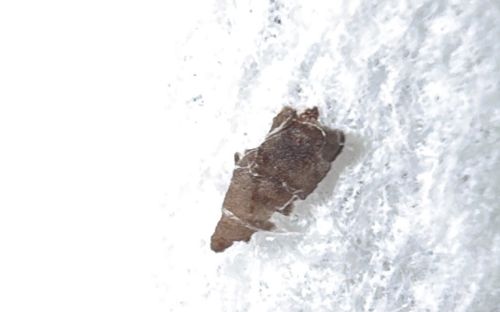
Household Casebearer (often specifically the Plaster Bagworm or Clothes Month larva case)
Phereoeca uterella (or related species like Tinea pellionella)
- Order & Family
- Lepidoptera: Tineidae
- Size
- Larval case is typically 8-13 mm long (approx. 0.5 inches)
Natural Habitat
Typically found indoors in humid climates, often on walls, in closets, garages, and underneath furniture where spider webs accumulate.
Diet & Feeding
The larvae feed on keratin found in natural fibers (wool, silk), spider webs, hair, lint, dead insects, and occasionally dried food products.
Behavior Patterns
Larvae construct a flattened, pumpkin-seed-shaped protective case out of silk and environmental debris (sand, dust, paint chips, insect parts). They drug this case around with them as they maximize protection. They are most active at night or in dark areas.
Risks & Benefits
Generally harmless to humans (they do not bite or sting), but they can be a nuisance pest. They may cause minor damage to wool, silk, or fur clothing and rugs, though they primarily feed on spider webs and old insect debris.