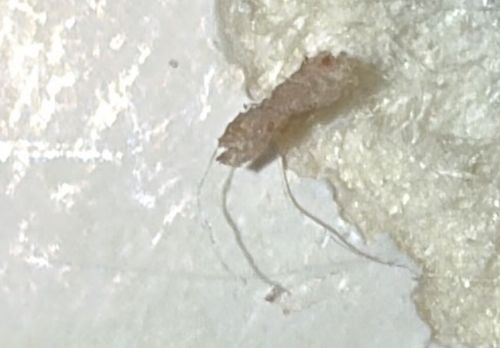
Springtail (specifically an Entomobryid Springtail)
Scientific Name: Collembola (Class), likely family Entomobryidae
Order & Family: Order: Entomobryomorpha, Family: Entomobryidae
Size: Typically extremely small, ranging from 1 mm to 3 mm in length.
Natural Habitat
Damp environments rich in organic matter. Often found in soil, leaf litter, decaying wood, and sometimes indoors in bathrooms, kitchens, or basements with high humidity.
Diet & Feeding
Detritivores and fungivores; they primarily feed on decaying organic matter, mold, algae, and microscopic fungi.
Behavior Patterns
Named for their unique defensive mechanism: a tail-like appendage called a 'furcula' tucked under their abdomen that can snap down, launching them into the air when threatened. They congregate in large numbers where moisture is present.
Risks & Benefits
Benefits: They are crucial decomposers that help recycle nutrients in soil and control mold growth. Risks: Generally harmless to humans and pets; they do not bite, sting, or transmit diseases, though large populations indoors can be a nuisance indicating a moisture problem.
Identified on: 2/17/2026