Booklouse (Booklice) or Barklouse
Scientific Name: Liposcelis spp. (Common genus, often Liposcelis bostrychophila)
Order & Family: Order: Psocodea (formerly Psocoptera), Family: Liposcelididae
Size: Very small, typically 1 mm to 2 mm in length.
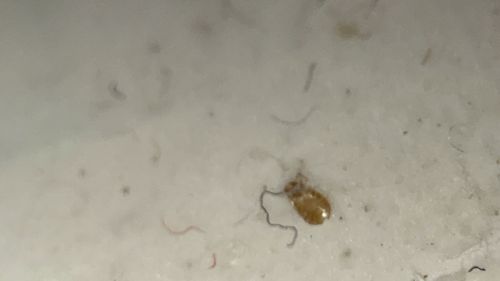
Natural Habitat
Found in high-humidity environments indoors, such as bathrooms, kitchens, basements, and libraries. They frequent damp books, paper, wallpaper, and stored food products.
Diet & Feeding
They feed on microscopic molds, fungi, starch, paper glue, and organic debris found in damp areas.
Behavior Patterns
Booklice are flightless and move in short, jerky bursts. They are most active in warm, humid conditions. They reproduce quickly via parthenogenesis (females can reproduce without males) in favorable environments.
Risks & Benefits
Risks: Generally harmless to humans; they do not bite, sting, or transmit disease. However, large infestations can contaminate stored food (grains, flour) and damage books or wallpaper. Their presence is usually an indicator of high humidity and potential mold growth.
Identified on: 2/16/2026