
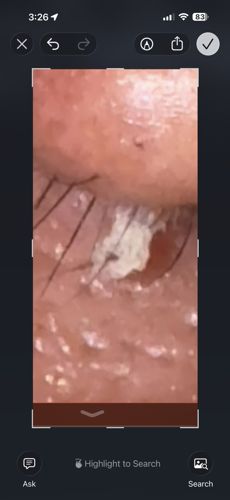
Community identification
Pubic Louse (infesting eyelashes, known as Phthiriasis palpebrarum)
Pthirus pubis
- Order & Family
- Order: Psocodea (formerly Phthiraptera); Family: Pthiridae
- Size
- Adults are approximately 1.5–2.0 mm long. Nits (eggs) are smaller, oval, and cemented to hair shafts.
Natural Habitat
Typically found in the coarse hair of the pubic region, but can migrate to other areas with coarse hair including eyelashes, eyebrows, beard, mustache, chest, and armpits.
Diet & Feeding
Hematophagous (feeds exclusively on human blood).
Behavior Patterns
These lice grasp hair shafts with their crab-like claws. They are relatively immobile compared to head lice. They cement eggs (nits) to the base of hair shafts. The infestation of eyelashes specifically is called 'Phthiriasis palpebrarum'.
Risks & Benefits
Risks: Can cause intense itching, irritation, and inflammation (blepharitis) of the eyelids. Scratching can lead to secondary bacterial infections. They are vectors for no known diseases but signify a parasitic infestation requiring medical treatment. Benefits: None.